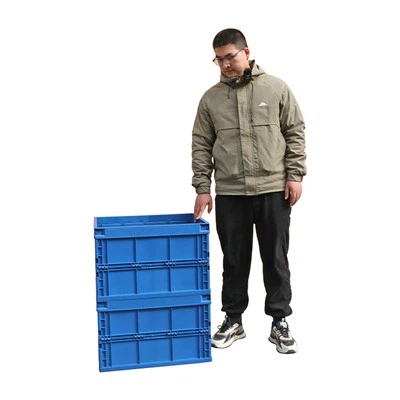
In the dynamic landscape of the textile industry, the choice of packaging and storage solutions plays a pivotal role in ensuring the efficiency, safety, and quality of textile products. One such solution that has gained significant attention is the KLT Box. As a leading KLT Box supplier, I am excited to delve into the question: Can KLT Boxes be used in the textile industry?
Understanding KLT Boxes
Before we explore their applicability in the textile industry, let's first understand what KLT Boxes are. KLT Boxes, also known as small load carriers, are standardized plastic containers designed for the storage and transportation of various goods. They are available in different sizes and designs, offering a high degree of flexibility to meet diverse requirements. You can find more information about KLT Boxes on our website KLT Box.
These boxes are known for their durability, stackability, and ease of handling. They are made from high-quality plastic materials that can withstand the rigors of daily use, including impacts, abrasions, and exposure to different environmental conditions. Additionally, KLT Boxes are designed to be compatible with automated storage and retrieval systems, which can significantly enhance the efficiency of warehouse operations.
Advantages of Using KLT Boxes in the Textile Industry
Protection of Textile Products
Textile products are often delicate and prone to damage during handling and transportation. KLT Boxes provide a secure and protective environment for textiles, shielding them from dust, moisture, and physical damage. The sturdy construction of the boxes ensures that the textiles remain intact and in good condition throughout the supply chain.
Organization and Inventory Management
In a large textile manufacturing or distribution facility, efficient organization and inventory management are crucial. KLT Boxes can be easily labeled and stacked, making it easier to identify and locate specific textile products. This reduces the time and effort required for inventory management, leading to increased productivity and cost savings.


Compatibility with Automated Systems
As the textile industry continues to embrace automation, the compatibility of packaging solutions with automated systems becomes increasingly important. KLT Boxes are designed to be used in conjunction with automated storage and retrieval systems, such as conveyor belts and robotic pickers. This allows for seamless integration into existing production and warehousing processes, improving overall efficiency and reducing labor costs.
Cost-Effectiveness
Compared to other packaging options, KLT Boxes offer a cost-effective solution for the textile industry. They are reusable, which reduces the need for frequent replacement and lowers the overall packaging costs. Additionally, their stackability and compatibility with automated systems can lead to significant savings in storage space and labor costs.
Applications of KLT Boxes in the Textile Industry
Raw Material Storage
KLT Boxes can be used to store raw materials such as yarns, fibers, and fabrics. Their secure design prevents the materials from getting tangled or damaged, ensuring that they are in good condition when needed for production.
Work-in-Progress (WIP) Management
During the manufacturing process, KLT Boxes can be used to transport and store work-in-progress items. This helps to keep the production line organized and efficient, reducing the risk of delays and errors.
Finished Product Packaging and Distribution
Once the textile products are finished, KLT Boxes can be used for packaging and distribution. They provide a convenient and secure way to transport the products to retailers or customers, ensuring that they arrive in good condition.
Comparison with Other Packaging Solutions
While KLT Boxes offer many advantages for the textile industry, it is important to compare them with other packaging solutions to determine the best fit for specific requirements. Two common alternatives are HP Turnover Boxes and EU Turnover Boxes.
HP Turnover Boxes are larger and more robust than KLT Boxes, making them suitable for heavy-duty applications. They are often used in industries where large quantities of products need to be transported and stored. You can learn more about HP Turnover Boxes on our website HP Turnover Box.
EU Turnover Boxes, on the other hand, are standardized containers that are widely used in Europe. They are available in a range of sizes and designs, offering a high degree of flexibility. You can find more information about EU Turnover Boxes on our website EU Turnover Box.
When choosing between KLT Boxes, HP Turnover Boxes, and EU Turnover Boxes, it is important to consider factors such as the size and weight of the textile products, the volume of production, and the specific requirements of the supply chain.
Case Studies
To illustrate the effectiveness of KLT Boxes in the textile industry, let's look at a few case studies.
Case Study 1: Textile Manufacturer
A textile manufacturer was facing challenges with the storage and transportation of their products. They were using traditional cardboard boxes, which were prone to damage and difficult to stack. After switching to KLT Boxes, they noticed a significant improvement in the protection of their products and the efficiency of their warehouse operations. The stackability of the KLT Boxes allowed them to maximize their storage space, while the durability of the boxes reduced the risk of product damage.
Case Study 2: Textile Distributor
A textile distributor was struggling to manage their inventory and ensure timely delivery of their products. They implemented KLT Boxes in their warehouse and integrated them with an automated storage and retrieval system. This allowed them to streamline their inventory management processes and improve the accuracy of their order fulfillment. As a result, they were able to reduce their lead times and increase customer satisfaction.
Conclusion
In conclusion, KLT Boxes offer a range of benefits for the textile industry, including protection of textile products, efficient organization and inventory management, compatibility with automated systems, and cost-effectiveness. They can be used for raw material storage, work-in-progress management, and finished product packaging and distribution. While there are other packaging solutions available, KLT Boxes are a versatile and reliable option that can meet the specific needs of the textile industry.
If you are interested in learning more about how KLT Boxes can benefit your textile business, or if you would like to discuss your specific requirements, please feel free to contact us. We would be happy to provide you with more information and assist you in finding the right packaging solution for your needs.