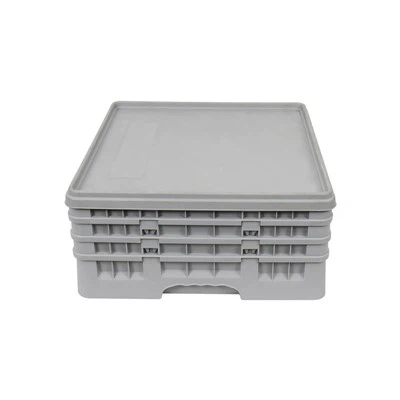
Plastic pallet containers have become an integral part of modern logistics and warehousing operations. As a plastic pallet container supplier, I have witnessed firsthand the diverse applications and the importance of understanding their load - bearing characteristics. In this blog, we will delve into the key aspects of the load - bearing capabilities of plastic pallet containers, exploring factors that influence them and how they can be optimized for different uses.
1. Understanding Load - Bearing Capacity
The load - bearing capacity of a plastic pallet container refers to the maximum weight it can safely support without suffering significant deformation or failure. This capacity is a crucial factor in determining the suitability of a pallet container for a particular application. For instance, in industries where heavy goods need to be transported or stored, a high load - bearing capacity is essential.
There are two main types of load - bearing capacities to consider: static and dynamic. Static load - bearing capacity is the maximum weight a pallet container can support when it is stationary. This is relevant when the pallet is used for storage purposes, such as in a warehouse where goods are stacked on pallets for long periods. Dynamic load - bearing capacity, on the other hand, is the maximum weight the pallet can handle while in motion, for example, when being moved by a forklift or a conveyor system.
2. Factors Affecting Load - Bearing Characteristics
2.1 Material Quality
The quality of the plastic used in manufacturing the pallet container has a significant impact on its load - bearing capacity. High - density polyethylene (HDPE) and polypropylene (PP) are commonly used materials due to their excellent strength and durability. HDPE, for example, offers high impact resistance and can withstand heavy loads without cracking or breaking. The quality of the plastic resin, including its molecular weight and density, also plays a role. A higher molecular weight generally results in better mechanical properties and a higher load - bearing capacity.
2.2 Design and Structure
The design of the plastic pallet container is another critical factor. Pallets with a well - engineered structure, such as reinforced ribs and a solid base, can distribute the load more evenly, increasing their load - bearing capacity. For example, pallets with a grid - like structure on the top surface can provide better support for irregularly shaped goods. Additionally, the shape and size of the pallet can affect its load - bearing capabilities. Larger pallets may have a higher overall load - bearing capacity, but they also need to be designed to handle the distribution of weight effectively.
2.3 Manufacturing Process
The manufacturing process used to produce the plastic pallet container can influence its load - bearing characteristics. Injection molding is a common method that allows for precise control of the shape and dimensions of the pallet. During injection molding, the plastic is melted and injected into a mold under high pressure, resulting in a strong and uniform product. Other processes, such as rotational molding, can also be used to create pallet containers with unique shapes and properties. The quality of the manufacturing process, including factors like the temperature and pressure settings, can impact the final strength and load - bearing capacity of the pallet.
3. Examples of Load - Bearing Capacities in Different Plastic Pallet Containers
3.1 1100x1100 Plastic Pallet
The 1100x1100 plastic pallet is a popular choice in many industries. It typically has a static load - bearing capacity of around 2 - 4 tons and a dynamic load - bearing capacity of 0.5 - 1.5 tons. This pallet is designed to be used with standard forklifts and pallet jacks, making it suitable for a wide range of applications, from warehouse storage to transportation. Its square shape and uniform structure allow for efficient stacking and handling, ensuring that the load is evenly distributed.
3.2 Solid Wall Plastic Pallet Box
Solid wall plastic pallet boxes are known for their high load - bearing capacity. These boxes are often used for storing and transporting heavy or bulky items. They can have a static load - bearing capacity of up to 5 tons or more, depending on the size and design. The solid walls of the box provide additional support and protection for the goods inside, reducing the risk of damage during handling and transportation.
3.3 Industry Folding Plastic Pallet Boxes
Industry folding plastic pallet boxes offer a balance between load - bearing capacity and space - saving. When folded, they take up less storage space, but when in use, they can support a significant amount of weight. These boxes typically have a static load - bearing capacity of 1 - 3 tons and a dynamic load - bearing capacity of 0.3 - 1 ton. Their folding design makes them ideal for applications where space is limited, such as in small warehouses or during transportation.
4. Optimizing Load - Bearing Performance
To ensure that plastic pallet containers perform at their best in terms of load - bearing capacity, several steps can be taken.


4.1 Proper Loading
Proper loading techniques are essential to maximize the load - bearing capacity of a pallet container. Goods should be evenly distributed across the pallet to avoid overloading one area. For example, when stacking boxes on a pallet, they should be arranged in a way that the weight is evenly spread. Additionally, the height of the load should be within the recommended limits to prevent the pallet from tipping over.
4.2 Regular Inspection
Regular inspection of plastic pallet containers is necessary to detect any signs of damage or wear. Cracks, breaks, or deformation can significantly reduce the load - bearing capacity of a pallet. By identifying and replacing damaged pallets in a timely manner, the risk of accidents and product damage can be minimized.
4.3 Compatibility with Handling Equipment
The load - bearing capacity of a plastic pallet container can also be affected by the handling equipment used. Forklifts and pallet jacks should be properly calibrated and maintained to ensure that they can handle the weight of the loaded pallets. Using the wrong type of handling equipment or overloading the equipment can lead to damage to the pallet and the goods.
5. Conclusion
Understanding the load - bearing characteristics of plastic pallet containers is crucial for businesses in the logistics and warehousing industries. By considering factors such as material quality, design, and manufacturing process, companies can choose the right pallet containers for their specific needs. Whether it's a 1100x1100 Plastic Pallet, a Solid Wall Plastic Pallet Box, or an Industry Folding Plastic Pallet Boxes, each type of pallet container has its own unique load - bearing capabilities.
If you are looking for high - quality plastic pallet containers with excellent load - bearing characteristics, we are here to help. Our company offers a wide range of plastic pallet containers to meet your specific requirements. Contact us today to discuss your needs and explore how our products can optimize your logistics and warehousing operations.
References
- "Plastic Pallets: A Comprehensive Guide" by Logistics Research Institute
- "Load - Bearing Analysis of Plastic Containers" in Journal of Industrial Packaging