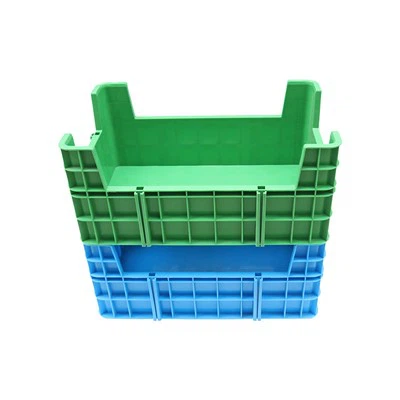
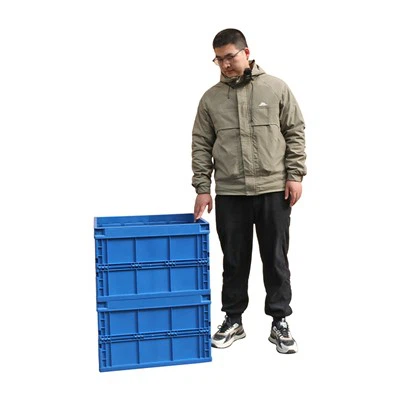
Hey there! As a supplier of industrial pallet containers, I've seen firsthand how temperature can have a big impact on these essential tools. In this blog, I'll share with you what I've learned about the effects of temperature on industrial pallet containers.
Expansion and Contraction
One of the most obvious ways temperature affects industrial pallet containers is through expansion and contraction. Most materials, including plastics and metals commonly used in making these containers, either expand when heated or contract when cooled.
Let's start with plastics. Plastic industrial pallet containers are popular because they're lightweight, corrosion - resistant, and cost - effective. But they're also quite sensitive to temperature changes. When the temperature rises, plastic pallet containers can expand. This expansion can lead to some serious issues. For example, if you stack several pallets and they expand, it might cause the stack to become unstable. There's a risk that the containers could topple over, which could damage the goods inside and even pose a safety hazard in the workplace.
On the flip side, when it's cold, plastics contract. The contraction can make the container more brittle. This means that there's a higher chance of cracks forming. Even a small movement or a minor impact could cause a crack to develop in a cold, contracted plastic pallet container. And once there's a crack, it can compromise the integrity of the container, making it less suitable for storing and transporting goods.
Now, let's talk about metal pallet containers. Metals also expand and contract with temperature changes, but generally, they do so to a lesser extent compared to plastics. However, even a small amount of expansion or contraction in metal can be a problem in some situations. For instance, in precision manufacturing settings where the fit between the pallet container and the storage racks is crucial, any change in the dimensions of the metal container due to temperature can lead to improper fitting. It might not fit properly on the rack, which could lead to inefficient use of storage space or even cause the container to fall off the rack.
Material Degradation
Temperature can also cause material degradation in industrial pallet containers. High temperatures can accelerate the aging process of plastics. Sun exposure, especially in hot climates, can lead to a phenomenon called UV degradation. When plastic pallet containers are exposed to intense sunlight and high temperatures for a long time, the UV rays break down the chemical bonds in the plastic. This makes the plastic weaker and more prone to damage. The color of the plastic might also fade over time, which not only affects its appearance but can also be an indication of the underlying material degradation.
For metal pallet containers, high temperatures can cause oxidation to happen more quickly. Oxidation is basically the process of rusting. When a metal pallet container is exposed to high temperatures and humidity, the metal starts to react with oxygen in the air. Rust weakens the metal structure, and as it progresses, it can cause holes to form in the container. This not only reduces the strength of the container but can also allow moisture and dirt to get inside, potentially damaging the goods being stored.
Cold temperatures can also have a degrading effect on materials. In the case of plastics, as mentioned earlier, cold - induced brittleness is a major issue. The repeated cycle of freezing and thawing can also cause micro - cracks to develop. These micro - cracks might not be visible at first, but over time, they can grow and lead to the complete failure of the plastic container.
Impact on Load - Bearing Capacity
The load - bearing capacity of industrial pallet containers can be significantly affected by temperature. When a plastic pallet container expands due to high temperatures, its overall structure becomes less rigid. This means that it can't support as much weight as it normally would. For example, if you've got a pallet container that's rated to hold a certain load under normal temperature conditions, in hot weather, it might not be able to handle that same load without deforming. The walls of the container might bulge, or the base could sag, which could lead to the goods inside shifting or even falling out.
Cold temperatures can also reduce the load - bearing capacity of plastic containers. The brittleness caused by the cold makes the plastic more likely to break under stress. Even a moderate amount of weight that the container could easily handle in normal temperatures might cause it to crack or shatter when it's cold.
Metal pallet containers are also affected by temperature when it comes to load - bearing capacity. When metal expands in the heat, its strength can be compromised. The molecular structure of the metal changes slightly, and this can result in a reduction in its yield strength. This means that it can start to deform at lower loads than usual.
Impact on Mobility and Handling
Temperature can have an effect on how easy it is to move and handle industrial pallet containers. In high temperatures, if the container is made of plastic and has expanded, it might become more difficult to stack and unstack. The expanded dimensions could make it a tight fit in storage areas or on forklift tines. This can slow down the loading and unloading process in a warehouse or distribution center.
Cold temperatures can make the surfaces of both plastic and metal pallet containers more slippery. Frost or ice can form on the container's surface, especially if it's stored outdoors in cold weather. This makes it dangerous for workers to handle the containers. There's a higher risk of accidents like slips and falls, and it can also be more difficult to maneuver the containers with forklifts or other handling equipment.
Solutions and Recommendations
Now that we've talked about the problems, let's look at some solutions. If you're using plastic pallet containers, it's a good idea to store them in a temperature - controlled environment as much as possible. This can help prevent excessive expansion and contraction. If outdoor storage is unavoidable, you can use covers to protect the containers from direct sunlight and extreme temperature changes.
For those looking for high - quality pallet containers, we offer a range of options like the Bulk Heavy Duty Pallet Box Lid. These lids are designed to be durable and can withstand some degree of temperature variation.
If you need containers that are more flexible in terms of storage, our Industry Folding Plastic Pallet Boxes are a great choice. They can be easily stored when not in use, and they're made to handle different temperature conditions.
For heavy - duty applications, our Heavy Duty Foldable Pallet Container is built to last. It's made from high - quality materials that can better resist the effects of temperature changes.
Conclusion
In conclusion, temperature has a wide - ranging impact on industrial pallet containers. It affects the physical dimensions, material integrity, load - bearing capacity, and handling of these containers. Understanding these effects is crucial for anyone involved in using or supplying industrial pallet containers.
If you're in the market for industrial pallet containers and want to learn more about how our products can withstand temperature variations, don't hesitate to reach out. We're here to help you find the best solutions for your specific needs. Whether you're dealing with high - heat environments or cold storage facilities, we've got the right containers for you. Contact us to start a discussion about your requirements and let's work together to find the perfect pallet container solution.


References
- "Thermal Properties of Materials" by a group of materials science researchers.
- "Container Design and Temperature Effects" from an industrial engineering journal.
- "Plastic and Metal Degradation at Different Temperatures" in a materials degradation research publication.