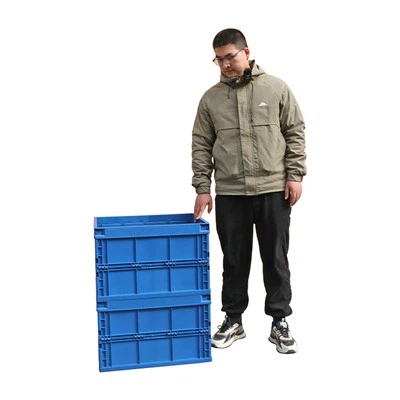
Are vented bulk containers easy to move around?
As a supplier of vented bulk containers, I've been asked this question numerous times. The answer isn't a simple yes or no; it depends on several factors. In this blog, I'll delve into the aspects that influence the mobility of vented bulk containers and provide insights to help you make an informed decision.
Design Features Affecting Mobility
The design of vented bulk containers plays a crucial role in their ease of movement. One of the key design elements is the shape. Most vented bulk containers are rectangular or square, which provides a stable base for stacking and moving. This regular shape allows for efficient use of space in storage and transportation, and it also makes it easier to handle with forklifts or pallet jacks.
Another important design feature is the presence of handles or grips. Many vented bulk containers are equipped with built - in handles on the sides, which make it possible for workers to manually lift and move smaller containers. These handles are usually ergonomically designed to reduce the strain on the hands and arms, enhancing the safety and ease of movement.
The type of ventilation also impacts mobility. Some vented bulk containers have perforated walls, like the Perforated Plastic Pallet Box. The perforations not only provide ventilation but also reduce the overall weight of the container. A lighter container is generally easier to move, whether by hand or with mechanical equipment.
Size and Capacity
The size and capacity of vented bulk containers are significant factors in their mobility. Smaller containers with lower capacities are typically easier to move around. They can be carried by a single person, and they require less space for storage and transportation. For example, a small vented bulk container used for storing and transporting fruits or vegetables in a local market can be easily lifted and moved by a vendor.
On the other hand, larger vented bulk containers with high capacities are more challenging to move. These containers are often used in industrial settings for storing and transporting large quantities of materials. They usually need to be moved with the help of heavy - duty equipment such as forklifts or cranes. The size and weight of these large containers can also make them more difficult to maneuver in tight spaces.
Compatibility with Handling Equipment
The ease of moving vented bulk containers is also determined by their compatibility with handling equipment. Most modern vented bulk containers are designed to be compatible with standard forklifts and pallet jacks. They have fork pockets or slots on the bottom that allow forklift tines to easily slide in and lift the container.
However, not all handling equipment is created equal. Some specialized handling equipment may require specific container designs. For instance, some automated storage and retrieval systems may need containers with precise dimensions and alignment features. As a supplier, we ensure that our vented bulk containers are designed to be compatible with a wide range of handling equipment to facilitate easy movement.


Surface and Terrain
The surface and terrain on which the vented bulk containers are moved can greatly affect their mobility. On a smooth, flat surface such as a warehouse floor, containers can be easily rolled or moved with a pallet jack. The wheels or casters on the containers can glide smoothly, reducing the effort required for movement.
In contrast, rough or uneven surfaces can pose challenges. Gravel, dirt, or bumpy floors can make it difficult to move containers, especially larger ones. The wheels may get stuck, or the container may tip over. In such cases, additional equipment or techniques may be needed to ensure safe and efficient movement.
Stackability and Stability
Stackability is an important aspect of vented bulk container mobility. Containers that can be stacked securely not only save space but also make it easier to move multiple containers at once. When containers are stacked, they can be lifted as a unit by a forklift, reducing the number of individual handling operations.
However, proper stacking requires a stable design. The containers should have a flat top and bottom to ensure a secure fit when stacked. Additionally, the weight distribution within the containers should be balanced to prevent tipping during movement. As a supplier, we test our vented bulk containers to ensure their stackability and stability.
Cost - Benefit Analysis of Mobility
When considering the ease of moving vented bulk containers, it's important to conduct a cost - benefit analysis. Investing in containers that are easy to move can lead to significant savings in labor costs and time. For example, if a company can move more containers in less time, it can increase its productivity and reduce operational costs.
On the other hand, containers with advanced mobility features may be more expensive. It's essential to weigh the benefits of easy movement against the additional cost. In some cases, the long - term savings in labor and efficiency may justify the higher upfront cost.
Conclusion
In conclusion, vented bulk containers can be easy to move around, but it depends on various factors such as design, size, compatibility with handling equipment, surface conditions, and stackability. As a supplier, we strive to provide vented bulk containers that are not only well - ventilated but also easy to move. Our Perforated Plastic Pallet Box is a great example of a container that combines ventilation with mobility features.
If you're in the market for vented bulk containers and want to discuss how our products can meet your mobility requirements, we encourage you to contact us for a procurement discussion. We're here to help you find the best solution for your business needs.
References
- Industry standards for vented bulk container design
- Case studies on the use of vented bulk containers in different industries
- Research on the impact of container design on mobility and handling efficiency