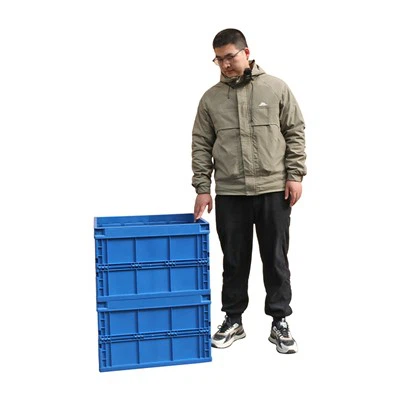
Hey there, fellow storage enthusiasts! As a supplier of EU Turnover Boxes, I often get asked about one crucial question: What is the load capacity of an EU Turnover Box when stacked? Well, let's dive right into it and explore this topic in detail.
Understanding EU Turnover Boxes
First off, let's get a quick understanding of what EU Turnover Boxes are. These boxes are widely used in various industries for handling, storing, and transporting goods. They come in standardized sizes and are known for their durability, stackability, and compatibility with different storage systems. You can check out our EU Turnover Box options on our website to see the range of products we offer.
Factors Affecting Load Capacity
The load capacity of an EU Turnover Box when stacked isn't a one - size - fits - all number. There are several factors that can influence it.


Material Quality
The material used to make the turnover box plays a huge role. Most EU Turnover Boxes are made of high - quality plastics that are designed to withstand heavy loads. However, different plastics have different properties. For example, a box made of a more rigid and impact - resistant plastic will generally have a higher load capacity. Our HP Turnover Box](/plastic-crate/automated-storage-and-retrieval-system-containers/hp-turnover-box.html) are made from top - notch materials, ensuring they can handle a significant amount of weight when stacked.
Box Design
The design of the box also matters. Boxes with reinforced corners, ribs, or a well - structured base can distribute the weight more evenly, increasing their load - bearing capacity. Some boxes are designed specifically for stacking, with features that allow them to interlock securely, preventing them from toppling over. Our KLT Box](/plastic-crate/automated-storage-and-retrieval-system-containers/klt-box.html) have a smart design that enhances their stackability and load capacity.
Storage Environment
The environment where the boxes are stored can affect their load capacity. If the storage area is hot and humid, the plastic may become more flexible, reducing its ability to hold heavy loads. On the other hand, extremely cold temperatures can make the plastic brittle. It's important to consider the storage conditions when determining how much weight a stack of boxes can hold.
Stacking Height
The higher you stack the boxes, the more pressure is placed on the bottom boxes. As a general rule, the load capacity decreases as the stacking height increases. For example, if a single box can hold 50 kg on its own, when stacked 5 high, the bottom box may need to support 250 kg (plus the weight of the boxes themselves), and this may exceed its safe load capacity. You need to be careful not to stack boxes too high to avoid crushing the bottom ones.
Determining the Load Capacity
Manufacturers usually provide specific load capacity ratings for their EU Turnover Boxes. These ratings are based on standardized tests that take into account the factors we just discussed. The ratings are typically given in kilograms and indicate the maximum weight a box can support when stacked under ideal conditions.
When you're planning to stack EU Turnover Boxes, it's a good idea to follow the manufacturer's guidelines. If you're using boxes from different manufacturers, make sure to check the load capacity of each type and calculate the total load carefully. Our ST Turnover Box](/plastic-crate/automated-storage-and-retrieval-system-containers/st-turnover-box.html) come with clear load capacity instructions to help you use them safely.
Real - World Examples
Let's say you're in the food industry, and you need to store cartons of canned goods in EU Turnover Boxes. You first need to know the weight of each can and the number of cans you'll be putting in each box. Then, based on the load capacity of the box, you can determine how many boxes you can stack safely.
If you have a box with a load capacity of 30 kg and each can weighs 1 kg, you can put 30 cans in each box. If you plan to stack the boxes 3 high, you need to make sure the bottom box can handle the weight of the two boxes above it (plus its own contents). If the box itself weighs 2 kg, the total weight on the bottom box would be (30 kg + 2 kg) x 2+ (30 kg + 2 kg)= 96 kg. So, you need to ensure the box's load capacity when stacked can support at least 96 kg.
Importance of Knowing Load Capacity
Knowing the load capacity of EU Turnover Boxes when stacked is crucial for several reasons. Firstly, it ensures the safety of your employees. If boxes are overloaded and collapse, it can cause serious injuries. Secondly, it helps protect your goods. Overloaded boxes can damage the products inside, leading to financial losses. Finally, it optimizes your storage space. By stacking boxes safely and efficiently, you can make the most of the available storage area.
Related Products
In addition to EU Turnover Boxes, we also offer other products that are suitable for automated storage and retrieval systems. Our Automated Storage and Retrieval Tote Bin are designed to work seamlessly with these systems, providing a reliable solution for storing and accessing goods.
Let's Talk Business
If you're in the market for EU Turnover Boxes or any of our other storage solutions, I'd love to hear from you. Whether you have questions about load capacity, product specifications, or need help choosing the right product for your business, feel free to reach out. We're here to help you find the best storage solutions that meet your needs and budget.
References
-
Plastics Industry Association. "Plastic Container Standards and Load Capacity Guidelines."
-
European Logistics Association. "Best Practices for Stacking and Storing Plastic Turnover Boxes."