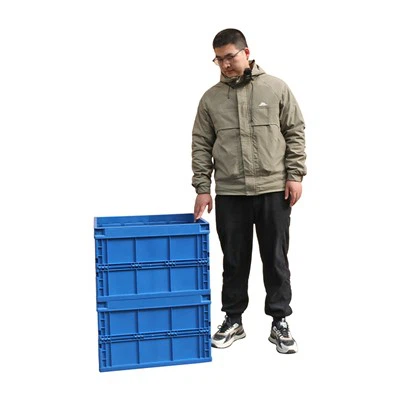
As a supplier of agricultural bulk containers, I've been frequently asked whether these containers can be used for transporting agricultural by - products. This question is not only relevant but also crucial for the efficiency and cost - effectiveness of the agricultural supply chain. In this blog, I'll delve into the details to provide a comprehensive answer.
Understanding Agricultural Bulk Containers
Agricultural bulk containers are specifically designed to handle large - scale agricultural products. They come in various shapes, sizes, and materials, each with unique features tailored to different needs. For instance, some are made of high - density polyethylene, which offers durability and resistance to harsh environmental conditions. Others are designed with specific ventilation systems to ensure proper air circulation, preventing the growth of mold and mildew.
One of our popular products is the Vented Collapsible Pallet Containers. These containers are collapsible, which means they can be easily stored when not in use, saving valuable space. The vented design allows for optimal air exchange, making them suitable for products that require ventilation.
Characteristics of Agricultural By - Products
Agricultural by - products vary widely in their physical and chemical properties. They can range from solid materials like bran, husks, and straws to semi - liquid substances such as molasses and slurry. Moisture content, particle size, and sensitivity to environmental factors are important considerations when transporting these by - products.


For example, wheat bran is a dry, powdery by - product with a relatively low density. It is prone to dust formation, so containers used for its transportation need to have good sealing properties to prevent spillage. On the other hand, molasses is a viscous, sticky substance that requires containers with smooth interiors to facilitate easy unloading.
Suitability of Agricultural Bulk Containers for By - Product Transport
Advantages
- Capacity and Efficiency: Agricultural bulk containers are typically large - volume containers, which can hold a significant amount of agricultural by - products. This reduces the number of trips required for transportation, increasing efficiency and reducing costs. For example, a single large - capacity bulk container can transport the same amount of straw as multiple smaller bags, saving time and labor.
- Protection: These containers offer protection against external factors such as moisture, pests, and physical damage. The robust construction of agricultural bulk containers ensures that the by - products are well - protected during transit. For instance, a sealed container can prevent rainwater from entering and spoiling the by - products, while a container with a pest - resistant design can keep insects and rodents away.
- Versatility: Many agricultural bulk containers can be customized to meet the specific needs of different by - products. For example, containers can be designed with different types of liners to prevent chemical reactions between the container material and the by - product. They can also be equipped with special handling features, such as forklift pockets or stacking capabilities, to facilitate easy loading and unloading.
Challenges
- Compatibility: While most agricultural bulk containers are suitable for a wide range of by - products, some by - products may have specific requirements that are not easily met by standard containers. For example, certain chemicals in some by - products may react with the container material, leading to corrosion or contamination. In such cases, special - purpose containers made of resistant materials may be required.
- Cleaning and Sanitization: After transporting agricultural by - products, containers need to be thoroughly cleaned and sanitized to prevent cross - contamination. Some by - products, especially those with high moisture content or organic matter, can leave behind residues that are difficult to remove. This requires proper cleaning procedures and equipment.
Case Studies
Let's look at a few real - world examples to illustrate the use of agricultural bulk containers for transporting by - products.
Case 1: Transporting Rice Hulls
A rice mill was looking for an efficient way to transport its rice hulls, a by - product of the rice - milling process. They decided to use our vented collapsible pallet containers. The containers' ventilation system allowed the rice hulls to dry during transportation, preventing the growth of fungi. The collapsible feature of the containers also saved storage space at the mill and the destination. As a result, the rice mill was able to reduce transportation costs and improve the quality of the rice hulls delivered.
Case 2: Transporting Dairy Manure Slurry
A dairy farm needed to transport its manure slurry to a nearby biogas plant. They chose a specialized agricultural bulk container with a smooth interior and a pumping system for easy unloading. The container was made of a corrosion - resistant material to withstand the acidic nature of the manure slurry. This solution not only ensured the safe and efficient transportation of the slurry but also reduced the environmental impact of manure disposal.
Considerations for Using Agricultural Bulk Containers for By - Product Transport
- Regulatory Requirements: Different regions may have specific regulations regarding the transportation of agricultural by - products. It is important to ensure that the containers comply with these regulations, such as requirements for food - grade materials or proper labeling.
- Cost - Benefit Analysis: When deciding to use agricultural bulk containers for transporting by - products, a cost - benefit analysis should be conducted. This includes considering the purchase or rental cost of the containers, transportation costs, and the potential savings in terms of product quality and efficiency.
- Logistics and Handling: Proper logistics and handling procedures need to be in place to ensure the safe and efficient use of the containers. This includes training staff on how to load, unload, and clean the containers, as well as establishing a system for tracking and managing the containers.
Conclusion
In conclusion, agricultural bulk containers can generally be used for transporting agricultural by - products, offering numerous advantages such as capacity, protection, and versatility. However, there are also challenges that need to be addressed, including compatibility issues and cleaning requirements. By carefully considering the characteristics of the by - products, regulatory requirements, and logistics, agricultural bulk containers can be an effective solution for transporting agricultural by - products.
If you are in the agricultural industry and are looking for reliable agricultural bulk containers for transporting your by - products, we would be more than happy to assist you. Our team of experts can provide you with customized solutions based on your specific needs. Contact us to start a procurement discussion and find the perfect container for your agricultural by - product transportation needs.
References
- Smith, J. (2020). Agricultural Supply Chain Management. Publisher X.
- Johnson, A. (2019). Container Design for Agricultural Products. Journal of Agricultural Engineering.