Can agricultural bulk containers be used for transporting fertilizers?
As a supplier of agricultural bulk containers, I often get asked whether our containers can be used for transporting fertilizers. This is a crucial question considering the importance of fertilizers in modern agriculture and the need for safe, efficient, and cost - effective transportation methods.
Fertilizers come in various forms, including granular, liquid, and powdered. Each form has its own set of requirements when it comes to storage and transportation. The suitability of agricultural bulk containers for fertilizer transportation depends on several factors, such as the type of fertilizer, the container's material, design, and the transportation conditions.
Types of Fertilizers and Their Characteristics
Granular fertilizers are the most common type. They are relatively easy to handle and can flow freely. However, they may produce dust during handling and transportation. Liquid fertilizers, on the other hand, are more prone to leakage and require containers that can provide a high - level of sealing. Powdered fertilizers are fine and can be easily dispersed, which means they need containers that prevent dust escape.
Container Materials
The materials used in agricultural bulk containers play a vital role in determining their suitability for fertilizer transportation. Common materials include plastic, steel, and composite materials.
Plastic containers are lightweight, corrosion - resistant, and relatively inexpensive. They are a popular choice for transporting fertilizers, especially granular and liquid ones. Plastic can withstand the chemical properties of many fertilizers without reacting. For example, high - density polyethylene (HDPE) is a commonly used plastic material in agricultural bulk containers. It has good resistance to acids, alkalis, and other chemicals typically found in fertilizers.
Steel containers are strong and durable. They can withstand rough handling and are suitable for long - distance transportation. However, steel is prone to corrosion when in contact with certain fertilizers, especially those with high moisture content or acidic properties. Therefore, steel containers often need to be coated with a protective layer to prevent corrosion.
Composite materials combine the advantages of different materials. They can offer high strength, corrosion resistance, and light weight. For example, some composite containers are made of fiberglass - reinforced plastic, which provides excellent chemical resistance and mechanical strength.
Container Design
The design of the agricultural bulk container is also important for fertilizer transportation.
One key design feature is the sealing mechanism. For liquid fertilizers, a tight - fitting lid and a reliable sealing system are essential to prevent leakage. Some containers are equipped with rubber gaskets or O - rings to ensure a proper seal.
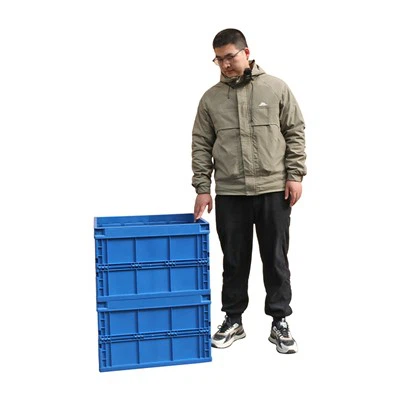
Another important design aspect is ventilation. Granular and powdered fertilizers may generate heat and moisture during storage and transportation. Vented containers can help to release this heat and moisture, preventing the formation of clumps or the growth of mold. Vented Collapsible Pallet Containers are a great example of containers designed with ventilation in mind. These containers have vents that allow air to circulate, keeping the fertilizers in good condition.
Collapsibility is also a valuable design feature. Collapsible containers can save a significant amount of space during return transportation or storage when they are empty. This can reduce transportation costs and storage requirements.
Transportation Conditions
The transportation conditions, such as temperature, humidity, and vibration, can also affect the suitability of agricultural bulk containers for fertilizer transportation.
Extreme temperatures can cause changes in the physical properties of fertilizers. For example, high temperatures can cause some liquid fertilizers to expand, increasing the risk of leakage. Containers need to be able to withstand these temperature variations without deforming or losing their integrity.
Humidity can also have an impact on fertilizers. High humidity can cause granular fertilizers to clump together and powdered fertilizers to become sticky. Vented containers can help to reduce the effects of humidity by allowing moisture to escape.
Vibration during transportation can cause fertilizers to settle or shift within the container. This can lead to uneven distribution and potential damage to the container. Containers should be designed to withstand vibration and keep the fertilizers stable.
Advantages of Using Agricultural Bulk Containers for Fertilizer Transportation
There are several advantages to using agricultural bulk containers for fertilizer transportation.
Firstly, they offer cost - effectiveness. Bulk containers can carry a large quantity of fertilizers at once, reducing the number of trips required for transportation. This can lead to significant savings in transportation costs.
Secondly, they provide better protection for fertilizers. Compared to traditional packaging methods, such as bags or drums, bulk containers can better protect fertilizers from external factors, such as moisture, dust, and physical damage.
Thirdly, they are more environmentally friendly. Reusable bulk containers can reduce the amount of packaging waste generated during fertilizer transportation. This is in line with the growing trend towards sustainable agriculture.
Challenges and Considerations
However, there are also some challenges and considerations when using agricultural bulk containers for fertilizer transportation.
One challenge is the cleaning of the containers. After transporting fertilizers, containers need to be thoroughly cleaned to prevent cross - contamination. Different fertilizers may have different cleaning requirements, and improper cleaning can lead to the degradation of the container or the contamination of subsequent loads.
Another consideration is the regulatory requirements. Different regions may have different regulations regarding the transportation of fertilizers. Suppliers need to ensure that their containers comply with these regulations to avoid legal issues.
Conclusion
In conclusion, agricultural bulk containers can be used for transporting fertilizers, but it is essential to consider the type of fertilizer, the container's material, design, and the transportation conditions. As a supplier of agricultural bulk containers, we offer a wide range of products that are suitable for different types of fertilizers. Our Vented Collapsible Pallet Containers are designed with ventilation and collapsibility in mind, providing an ideal solution for fertilizer transportation.


If you are interested in purchasing agricultural bulk containers for fertilizer transportation, we invite you to contact us for further discussion. We can provide you with detailed information about our products and help you choose the most suitable container for your needs.
References
- "Fertilizer Handbook", International Fertilizer Industry Association
- "Materials for Agricultural Containers", Journal of Agricultural Engineering Research
- "Transportation of Hazardous Materials: Fertilizers", Department of Transportation Guidelines