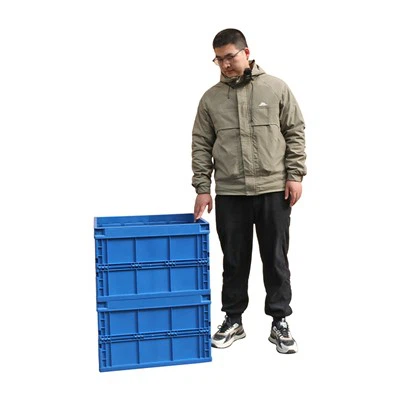
As a supplier of Vented Collapsible Pallet Containers, one question that frequently comes up from our customers is whether these containers can withstand high temperatures. This is a crucial concern, especially for industries that deal with hot products or operate in high - temperature environments. In this blog, we'll delve into the science behind the heat resistance of our Vented Collapsible Pallet Containers and provide a comprehensive answer.
Understanding the Material
Our Vented Collapsible Pallet Containers are typically made from high - quality plastics. The most common material used is polypropylene (PP). Polypropylene is a thermoplastic polymer known for its excellent chemical resistance, high stiffness, and good impact strength. But what about its heat resistance?
Polypropylene has a melting point that generally ranges from 160°C to 166°C (320°F to 331°F). This means that under normal circumstances, it can withstand relatively high temperatures without deforming immediately. However, it's important to note that the mechanical properties of polypropylene start to change as the temperature approaches its melting point.
Factors Affecting Heat Resistance
1. Duration of Exposure
The length of time the container is exposed to high temperatures plays a significant role. Short - term exposure to high temperatures may not cause any significant damage to the Vented Collapsible Pallet Containers. For example, if the container briefly passes through an area with high - temperature air during a manufacturing process, it can likely handle the heat without issue.
On the other hand, long - term exposure to elevated temperatures can lead to changes in the material's structure. Over time, the plastic may become more brittle, lose its flexibility, and eventually start to deform. This is because the polymer chains in the polypropylene begin to break down when exposed to heat for extended periods.
2. Temperature Intensity
Obviously, the higher the temperature, the more stress it places on the container. If the temperature is close to or above the melting point of polypropylene, the container will start to melt or deform rapidly. Even temperatures well below the melting point can cause problems. For instance, at temperatures around 80°C to 100°C (176°F to 212°F), the container may experience a reduction in its impact resistance and stiffness.
3. Design and Thickness
The design of the Vented Collapsible Pallet Containers also affects their heat resistance. Containers with thicker walls are generally more heat - resistant than those with thinner walls. Thicker walls provide more material to absorb and dissipate heat, reducing the risk of deformation.
The vented design, while beneficial for air circulation and ventilation, can also have an impact on heat resistance. The vents allow heat to escape more easily, which can help prevent the build - up of heat inside the container. However, they can also make the container more vulnerable to external heat sources, as the vents provide a direct path for heat to enter.
Testing and Certification
At our company, we take the heat resistance of our Vented Collapsible Pallet Containers seriously. We conduct a series of rigorous tests to ensure that our products meet the highest standards.
We use specialized equipment to simulate different temperature conditions and exposure times. During these tests, we closely monitor the containers for any signs of deformation, discoloration, or changes in mechanical properties. Only after passing these tests do our containers receive the necessary certifications.
Our containers are certified to meet industry standards for heat resistance. These certifications provide our customers with the confidence that our products can perform well under a variety of temperature conditions.
Applications in High - Temperature Environments
Despite the limitations of polypropylene's heat resistance, our Vented Collapsible Pallet Containers can still be used in some high - temperature applications.
1. Food Processing
In the food processing industry, products are often heated during the manufacturing process. Our containers can be used to transport and store hot food products, as long as the temperature is within the acceptable range. For example, they can be used to hold freshly baked goods or cooked meats, as long as the products have cooled down slightly before being placed in the containers.
2. Chemical Manufacturing
Some chemical processes involve high temperatures. Our containers can be used to store and transport chemicals that are not extremely hot. However, it's important to ensure that the chemicals are compatible with the polypropylene material.
Precautions for High - Temperature Use
If you plan to use our Vented Collapsible Pallet Containers in high - temperature environments, there are several precautions you should take.
1. Temperature Monitoring
Regularly monitor the temperature of the products and the environment. Use temperature sensors to ensure that the temperature does not exceed the recommended limits for our containers.
2. Cooling Time
Allow hot products to cool down before placing them in the containers. This will reduce the stress on the containers and prevent deformation.
3. Storage Conditions
Store the containers in a cool, dry place when not in use. Avoid exposing them to direct sunlight or other sources of heat for extended periods.
Conclusion
In conclusion, our Vented Collapsible Pallet Containers can withstand a certain degree of high temperatures, thanks to the properties of the polypropylene material and our careful design. However, it's important to understand the limitations and take appropriate precautions when using them in high - temperature environments.


If you have any further questions about the heat resistance of our Vented Collapsible Pallet Containers or are interested in purchasing our products, we encourage you to contact us for a detailed discussion. Our team of experts is ready to assist you in finding the best solution for your specific needs.
References
- "Polypropylene: Properties, Processing, and Applications" by S. Fakirov
- Industry standards for plastic container heat resistance