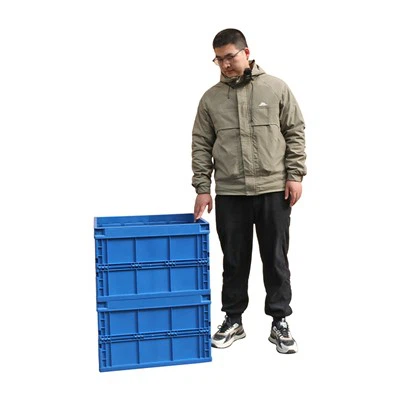
As a supplier of rigid pallet boxes, optimizing the arrangement of these boxes in a truck is a topic close to my heart. Efficient space utilization not only reduces shipping costs but also maximizes the number of products that can be transported in a single trip. In this blog post, I'll share some practical tips and strategies on how to arrange rigid pallet boxes in a truck for better space utilization.
Understanding the Truck's Dimensions and Capacity
Before loading rigid pallet boxes into a truck, it's crucial to have a clear understanding of the truck's dimensions and capacity. This includes the length, width, and height of the cargo area, as well as any weight restrictions. By knowing these specifications, you can determine the maximum number of pallet boxes that can fit in the truck and plan the loading arrangement accordingly.
For example, if you're using a standard 20 - foot container, the internal dimensions are approximately 5.9 meters in length, 2.35 meters in width, and 2.39 meters in height. You need to consider these dimensions when arranging your Heavy Duty Storage Plastic Pallet Box to make the most of the available space.
Selecting the Right Pallet Box Size
The size of the rigid pallet boxes plays a significant role in space utilization. It's essential to choose pallet boxes that are compatible with the truck's dimensions. Oversized boxes may not fit properly, leaving gaps and wasting space, while undersized boxes may not fully utilize the available area.
Our company offers a variety of pallet box sizes, including Solid Wall Plastic Pallet Box, which come in different dimensions to meet various customer needs. By selecting the right size, you can ensure a more efficient packing arrangement.
Stacking Techniques
Proper stacking is key to optimizing space in a truck. There are several stacking techniques that can be used depending on the shape and size of the pallet boxes.
- Vertical Stacking: This is the most common method, where pallet boxes are stacked one on top of another. When using vertical stacking, it's important to ensure that the boxes are stable and evenly distributed to prevent toppling during transit. You can use interlocking features on the pallet boxes, if available, to enhance stability.
- Pyramid Stacking: In some cases, pyramid stacking can be used to make better use of the available height. This involves stacking smaller boxes on top of larger ones in a pyramid - like shape. However, this method requires careful planning to ensure that the weight is evenly distributed and the stack remains stable.
- Cross - Stacking: Cross - stacking involves placing the pallet boxes at right angles to each other. This can help to fill in gaps and create a more compact arrangement. It's particularly useful when dealing with rectangular or square - shaped boxes.
Loading Sequence
The order in which you load the pallet boxes into the truck can also affect space utilization. A good approach is to start with the largest and heaviest boxes at the bottom and work your way up to the smaller and lighter ones. This not only helps to create a stable base but also allows you to make the most of the available space.
It's also important to consider the destination of the goods. If you have multiple stops, load the boxes that need to be unloaded first near the door of the truck. This way, you can avoid having to move other boxes around to access the ones you need.


Utilizing Empty Spaces
There are often small empty spaces in a truck that can be utilized. For example, you can fill the gaps between pallet boxes with smaller items or use filler materials such as foam or cardboard to prevent movement during transit.
You can also consider using the space above the pallet boxes if it's safe to do so. However, make sure that any additional items are properly secured to prevent them from falling and causing damage.
Using Loading Aids
Loading aids such as forklifts and pallet jacks can make the loading process more efficient and help to optimize space. Forklifts can be used to lift and place the pallet boxes in the truck, allowing for more precise positioning. Pallet jacks are useful for moving the boxes around within the truck and can help to ensure that they are arranged in a compact manner.
Consideration of Weight Distribution
In addition to space utilization, weight distribution is also an important factor. Uneven weight distribution can cause the truck to become unstable during transit, leading to safety risks. Make sure that the weight of the pallet boxes is evenly distributed across the truck's cargo area.
You can calculate the weight of each pallet box and plan the loading arrangement accordingly. If necessary, you can use weight - distribution tools to ensure that the truck is balanced.
Regular Review and Improvement
Space utilization is not a one - time process. It's important to regularly review your loading arrangements and look for ways to improve. You can collect data on the number of pallet boxes loaded, the amount of space used, and any issues that arise during transit. Based on this data, you can make adjustments to your loading strategies to achieve better results.
Conclusion
Arranging rigid pallet boxes in a truck for better space utilization requires careful planning, the right selection of pallet boxes, and the use of appropriate stacking and loading techniques. By following the tips and strategies outlined in this blog post, you can maximize the number of pallet boxes that can be transported in a single trip, reduce shipping costs, and improve overall efficiency.
If you're interested in learning more about our Heavy Duty Storage Plastic Pallet Box or Solid Wall Plastic Pallet Box, or if you have any questions about optimizing space utilization in your truck, please feel free to contact us for a detailed discussion and procurement negotiation.
References
- "Logistics and Supply Chain Management" by Martin Christopher
- "Warehousing and Distribution Center Operations" by Edward Frazelle